NEWS 23 February 2022
Picosecond ultrasonics for nanometer resolution
Applying ultrasound in the Megahertz range for the investigation of the human body is a well-known medical practice. But using ultrasound to study nanometer structures requires ultrahigh sound frequencies in the Gigahertz range.
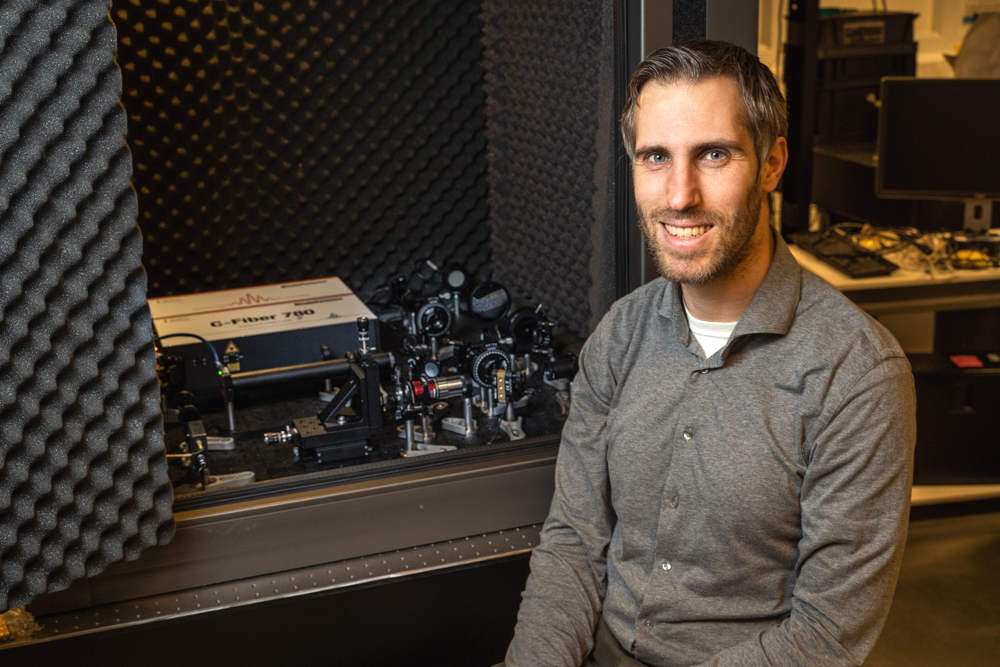
But using ultrasound to study nanometer structures requires ultrahigh sound frequencies in the Gigahertz range. Delft University of Technology researcher Gerard Verbiest and his team succeeded in reaching vertical nanometer accuracies thanks to the photoacoustic effect. But achieving these accuracies in lateral directions required a second trick, as described in this Mikroniek article: the application of an atomic force microscope. (Image courtesy of TU Delft)