EVENT 11 August 2020
European Optical Society Biennial Meeting (EOSAM) 2018
Venue TU Delft Aula Conference Center, Delft, the Netherland Important dates Submission timeframe: 1 December 2017- 15 April 2018 Informing authors about acceptance: 30 May 2018Detailed program: 30 July...
About this event
 Venue
Venue
TU Delft Aula Conference Center, Delft, the Netherland
Important dates
Submission timeframe: 1 December 2017- 15 April 2018
Informing authors about acceptance: 30 May 2018
Detailed program: 30 July 2018
Netherlands is the hot spot for photonics in Europe and the strong optics research and industry in Delft makes it a perfect location to hold the upcoming symposium.
The meeting will once again include several topical meetings, tutorials, company visits, workshops, industrial exhibition, and more.
The Topical Meetings (TOMs) include
TOM 1- Silicon Photonics and Guided-Wave Optics
TOM 2- Freeform Optics for Illumination, AR and VR
TOM 3- Optical System Design, Tolerancing, and Manufacturing
TOM 4- Bio-Medical Optics
TOM 5- Metamaterials, Plasmonics and Resonant Nanophotonics
TOM 6- Frontiers in Optical Metrology
TOM 7- Organic & Hybrid Semiconductor Materials and Devices
TOM 8- Adaptive Optics & Information driven optical systems
TOM 9- Optical tapered fibers for light manipulation on the nanoscale – NEW
Special workshops and sessions
EU Project result dissemination Session
Grand Challenges of Photonics Session
The event is expected to gather nearly 400 people from Europe and all over the world.
Next to the conference and the work-shops there is an industrial exhibition from the 10th to the 11th of October.
References ...

DSPE Opto-Mechatronics Symposium 2026
The seventh edition of the DSPE Opto-Mechatronics Symposium will take place on 8 October 2026. This year’s theme is ‘The opto-mechatronics of telescopes: from tiny to extremely large’.
Read more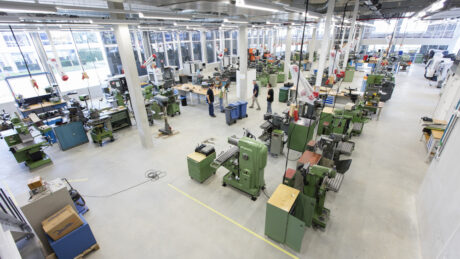
DSPE and LiS join forces
SDPE supports the nationwide expansion of the Leidse instrumentmakers School (LiS) to strengthen the pipeline of precision manufacturing professionals in the Netherlands.
Read more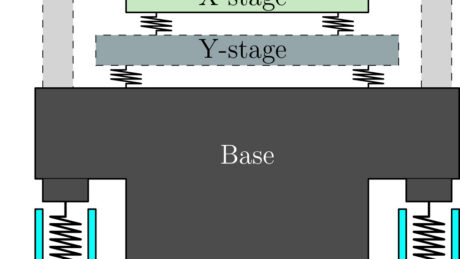
Structure-preserving model reduction
High-precision machines are often modelled as assemblies of flexible substructures, which preserves physical insight but leads to models that are too large for efficient dynamic analysis and control design.
Read more