
Program DSPE Symposium 2026
Thursday October 8th
Program schedule

Chairman: Lennino Cacace
Opto-Mechatronic System Architect at AC Optomechanix & Assistant Professor at TU/e | Stefan Hild: Professor of Fundamental Physics Maastricht University |
 | Wouter Jonker: Senior Project Manager / Program manager ground based Astronomy TNO Title: The Extremely Large Telescope – how to get the Sharpest views of the Universe The European Southern Observatory ESO is progressing fast with the construction of the Extremely Large Telescope (ELT) in the Chilean Atacama desert. When completed, ELT will collect more starlight than all other large telescopes on earth put together. The development of an opto-mechatronic system of this size and precision is an enormous challenge. And even at the best observing sites on earth, atmospheric turbulence severely limits the image resolution of large telescopes.
Using ELT as an example, during this presentation some of the engineering challenges that astronomers have to overcome, the developments going on in the Netherlands, and the key role of adaptive optics in getting the sharpest views of the universe will be discussed. |
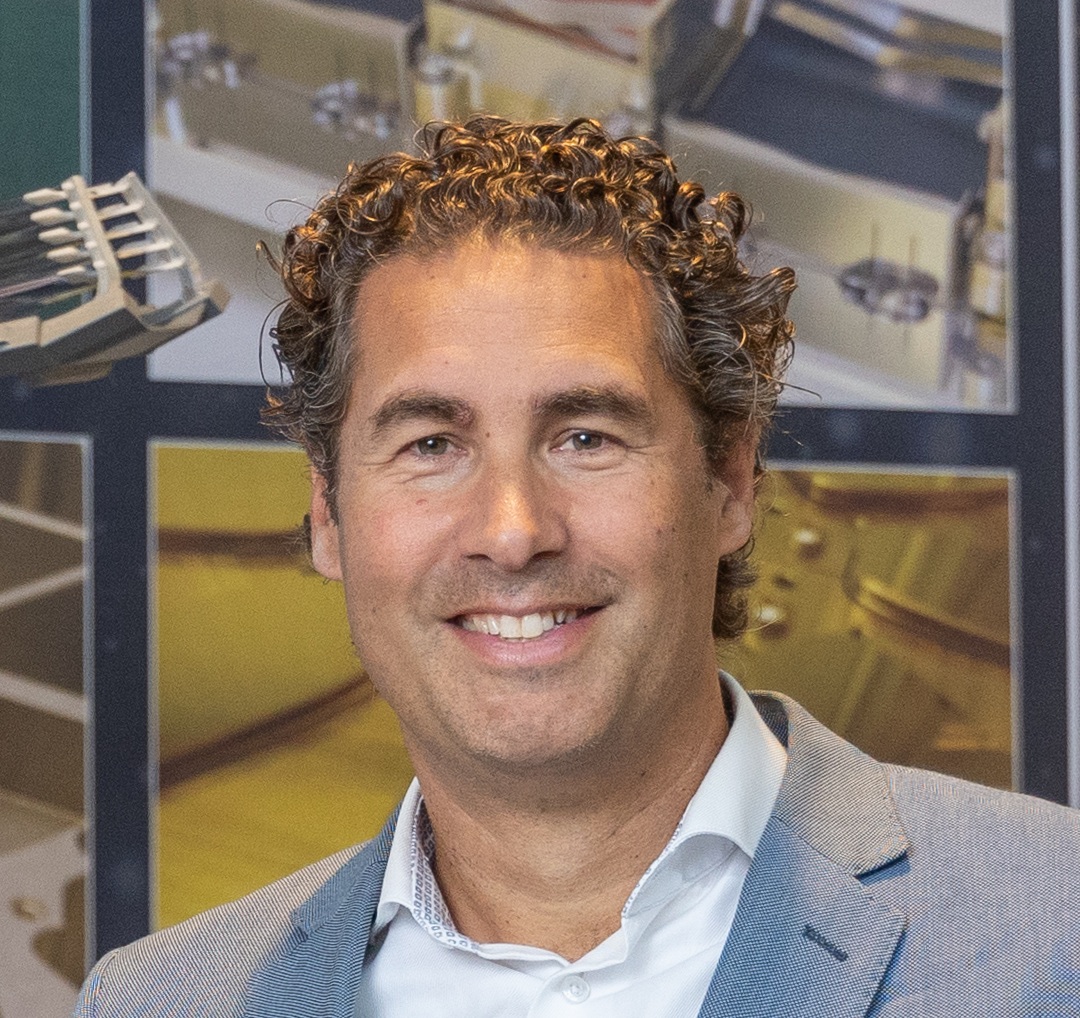 | Ramon Navarro: Head of Optical infrared R&D Nova Title: Design and Development of a Compact Imaging Payload Based on Monolithic Tiny Telescope Architecture Conventional telescopes rely on multi-element optical assemblies requiring precise alignment and complex mechanical structures, limiting their scalability for Drones, small satellites and other applications. This presentation covers the design and development of a compact imaging payload based on the monolithic Tiny Telescope architecture, combining high imaging performance with reduced volume, mass, and mechanical complexity. The monolithic optical architecture integrates reflective and refractive surfaces, internal baffling, and structural features within a single optical element, providing a compact and mechanically robust solution while maintaining diffraction-limited optical performance. The optical design and payload architecture are presented, including the selection and integration approach of the imaging sensor. Image contrast enhancement algorithms improve the quality and interpretability of the acquired imagery. The use of this technology in different applications is highlighted.
|
 | Gabby Kroes: Senior opto-mechanical design Engineer at SRON Title: Optomechanics in Astronomy Astronomy is inherently diverse, covering an enormous range of electromagnetic wavelengths and increasingly involving multiple cosmic messengers, including gravitational waves. This diversity requires a correspondingly broad range of instruments and technologies, deployed in both ground- and space-based observatories. This talk will provide an overview through examples of astronomical instruments operating across different wavelength. The examples will illustrate how the scientific objectives translate into specific requirements for the instrument design and technology. Attention will be given to the role of opto-mechanics, including optical systems, precision structures, mechanisms, alignment, stability and thermal management. The talk will highlight the different approaches taken in ground- and space-based instruments and the engineering considerations that influence their design. |
 | MSc. Roland Blok: CTO Aircision Title: “Empower High-Speed and Secure Connectivity.” Aircision (Eindhoven) builds free-space optical (FSO) communication systems: wireless links carrying data on laser beams instead of RF or fiber. The technology is license-free, jam-resistant and leaves no detectable RF signature, serving defense, telecom backhaul, and disaster-recovery networks. Current products cover 1-10 km links at up to 10 Gbps; a 2025 field trial demonstrated 5.7 Tbps over 5 km. |
 | Maarten Hebbink: Optical Engineer at NTS Optel Title: The development of a Next-Generation of a Wafer Metrology system How do you design a metrology system capable of characterizing next-generation optical wafer technologies such as diffractive optical elements (DOEs), microlens arrays (MLAs) and metalenses while coping with extreme projection angles, demanding accuracy requirements and high throughput expectations? In this presentation, NTS Optel shares the development journey of an Optical Wafer Tester for advanced semiconductor and photonics applications. We discuss the key system requirements and the most critical engineering challenges, ranging from optical architecture trade-offs and speckle reduction to wafer handling, alignment and calibration. Using NTS’ Product Creation Process, we demonstrate how feasibility studies were translated into practical design decisions across optics, mechanics, electronics and software. The presentation highlights the selection and validation of competing metrology concepts, the innovations that enabled reliable measurement of complex optical patterns, and the lessons learned during prototyping and system integration. We will provide valuable insight into the multidisciplinary development of high-precision optical inspection equipment and show how a structured systems engineering approach can accelerate innovation while reducing technical risk.
|
 | Aron Beekman: Technology Manager Computational Physics & Mathware Architect (Sioux) Title: Compensating thermal deformations in the Einstein Telescope In the future Einstein Telescope gravitational wave observatory, 1MW laser power resonates between two mirrors at 10 kilometers distance. Some part of the light is absorbed by the mirrors causing thermal deformation which lead to signal degradation. The MeROPE consortium explores novel sensors and actuators to compensate for these deformations. To close the loop between detection and actuation, advanced algorithms are necessary to distill the tiny signatures of the deformations from the main signal.
With a complete simulation model of the optical system including a Phase Camera – that can measure both the intensity and the phase of the light – we can deduce the deformation state of the mirrors. This provides the information necessary to direct the compensation system. We will give an overview of this scheme and preliminary results on a tabletop experiment with suspended mirror and the Phase Camera. |
 | Joris van Heijningen: assistant professor | Vrije Universiteit Amsterdam & Nikhef Title: Vibration sensing on the proton scale with compact devices. Kilometer-scale interferometers are used to detect gravitational waves originating from colliding black holes that stretch space-time by 1 part in 10²² (ten sextillion). The mirrors and other elements of the detector are decoupled from the Earth’s ever-present motion by advanced seismic isolation systems, which require extremely sensitive and compact (inertial) sensors. For future detectors, even the best commercial sensors do not comply with sensitivity requirements, because the best commercial seismometers are designed to characterise the quietest places on Earth. However, our seismic attenuation systems create environments that move much less than Earth at frequencies where we would like to detect a black hole merger. I will give an overview of the custom – and opto-mechatronic – sensors from the field, future directions, and how they might be used in industry.
|